Showing posts with label character development. Show all posts

Tuesday, February 18, 2020

Author Toolbox Blog Hop: Developing Characters in Your Writing

#AuthorToolboxBlogHop
Hello and welcome to the Focused on Story Blog and to the Author Toolbox Blog Hop #AuthorToolboxBlogHop which meets every third Wednesday of the month to share resources and tips for authors. Thanks to Raimey Gallant for hosting this venture. 

Please join us to learn more about the craft of writing and to meet bloggers who are dedicated to helping each other become the best writers possible. Click here to visit other blog hop participants.
🛠🛠🛠🛠
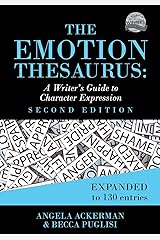
The Emotion Thesaurus: A Writer's Guide to Character Expression (Second Edition) (Writers Helping Writers Series) Paperback
The Emotion Thesaurus: A Writer's Guide to Character Expression
Available at your Favorite Bookseller
Tip on Developing Characters in Your Writing by J.Q. Rose

If you are a romance writer, you don't want to edit a romantic scene and discover it reads like a second-grader wrote it or that you used the same words over and over and over and over. I have a tip today to help you find the right words to show not tell a love story with characters who will grab a reader.

My go-to book for helping me to get out of that stuck stage when writing a scene is The Emotion Thesaurus: A Writers Guide to Characters Expression. 

The description describes the purpose of the book--"The Emotion Thesaurus, in its easy-to-navigate list format, will inspire you to create stronger, fresher character expressions and engage readers from your first page to your last."

The table of contents is easy to use to find the emotion you need to portray. You'll appreciate it when looking through the 130 emotions listed to discover the one you need. Here are examples of the emotions that are covered in the book--Fear, Frustration, Happiness, Impatience, Nostalgia, Pride and more.

In the listings for each emotion, you will find ideas to keep your writing fresh.
  • physical signals
  • internal sensations
  • mental responses
  • cues of acute or long-term (emotion)
The authors do not suggest you copy the information word for word, but rather to allow their suggestions to inspire you to show, not tell the story.

Since writing this book, the authors have extended the Thesaurus into a series for other topics in writing like character flaws, character attributes, psychological trauma and more.

Do you use this book or any in the series? Please leave a comment below. Thank you.
🛠🛠🛠🛠

The Rose Courier--delivered to your inbox every month!
Click here or on the Rose Courier graphic at the top of the sidebar to have your copy of the Courier delivered to your inbox. You'll find out about new releases, favorite authors, giveaways, contests with prizes and what JQ is up to.
Thanks!


Thursday, October 2, 2014

Romance and Mystery Authors on Writing: Roseanne Dowell on Characters and Editing, Giveaway


To listen to the welcome and introduction of the Romance and Mystery Authors on Writing series, 
click the red arrow at the top of the page.


Hello and welcome to the kick-off of the series, Romance and Mystery Authors on Writing. Our "tipster" author today is Roseanne Dowell. Roseanne is giving away an e-copy of her romance/mystery, All in the Family. Please leave a comment to be eligible for the drawing on Sunday at 9 p.m.


Roseanne, where do you get your ideas for stories?
1.      Where I get my ideas. That’s easy. Everywhere, from groceries stores, looking in people’s carts,  restaurants, overhearing people’s conversations, to making up stories of people sitting next to me in traffic. Even newspaper articles, classified ads, just everywhere around us.

     Thanks so much for sharing these helpful tips on characters and editing. 

CHARACTER  SHEET 

I always make a character sheet for the main characters of the book. I like to know everything about them – the obvious, of course, age, hair and eye color, height, build, occupation, favorite color, do they like children, animals, where they live, where they grew up, do they have sisters, brothers. Their likes, dislikes, birth date, favorite sport, hobby, general physical description, what kind of clothes do they like to wear, what’s important to them, their dreams, goals, what do they fear, undesirable characteristics *yes even the hero/heroine should have undesirable traits, no one is perfect. 
I often make storyboards with pictures from magazines of my hero/heroine other important characters labeled with their names, even their houses or other important settings. It’s amazing how helpful that is. 

EDITING

1. Editing. Wow that’s a topic in and of itself. One of the first and most important things to do before editing is to let your manuscript sit for at least a week. I usually let mine sit longer – a month or months. You need to get away from it for a while, forget about it. When you come back to it, it’ll be with fresh eyes.  One of the first things I look for is the word, ‘that’ . Most of them can be removed. And then is also over used. Type in She/he – see if you can change the sentence to avoid overuse. Many sentences can be changed with strong verbs and eliminating she/he to start a sentence. Watch verb tenses keep them consistent. And a pet peeve of mine is the improper use of me and I when combined with another name and and. There’s an easy way to see which one to use. Jordan and I went to the store, eliminate Jordan and – you’re left with I went to the store which is correct. You wouldn’t say me went to the store. Another example. Sarah went to the store with Jordan and me. If you eliminate Jordan and – you’re left with Sarah went to the store with me. That is correct, you wouldn’t say Sarah went to the store with I. 
2. Vary the length of your sentences. Sometimes shorter sentences are better. It’s fine to use a compound sentence occasionally, but if you use too many, or if your sentence is so long you run out of breath reading it aloud, much like this sentence, shorten it. Short choppy sentences add tension. Sometimes it’s good to have a string of short sentences. 
3. Be careful with ing words. If you begin a sentence with an ing word, the action has to be physically possible to carry through to the end of the sentence. Example – Getting into the car, I turned on the ignition. Impossible. You have to be in the car to turn it on.  Sobbing, I got into the car and turned the ignition. That works because you can sob the whole time you’re getting into the car. 

Roseanne's advice to writers--"WRITE! Write every day."


Ø    Back of the book: Taking over the police chief’s job in her hometown should have been easy for Callie Johnson. At least that's what she thought. After working in a big city, small town crime would be a breeze. What a surprise when she arrives to find her grandmother, the judge, accused of murder. As if that wasn't enough she’s attacked while walking to her car. Between criminal investigations, her nutty family’s antics and her Aunt Beatrice Lulu's matchmaking, Callie definitely has her work cut out for her. Will her grandmother be exonerated? Can Callie ward off her aunt’s unsuitable suitors? What other surprises were in store for her? More importantly, can she find the person who attacked her?

      Purchase Link and sample for All in the Family

About  Roseanne Dowell

Roseanne grew up reading first Nancy Drew mysteries and soon moved on to Victoria Holt and Phyllis Whitney. She’s a big fan of Agatha Christie and always loved writing even as a teen, often making up different endings to books she read and writing poems. 
While working as a school secretary, she took  a correspondence course, writing for children. It didn’t take long to realize that even though she had six children, it took someone special to write books for them. So, she tried her hand at nonfiction, but didn’t care for that either.  That’s when she moved on to romance novels. But they sat in the attic with her poems and journals.

In 2002 at a Book Club meeting, she confessed regret about not pursuing a career in writing. That’s all it took.  Her friends convinced her it wasn’t too late. After giving it some thought, she decided they were right and took another writing course. Within a few months, her first article was published in Good Old Days Magazine. Since then, she’s had articles published in several magazines. 

In 2006, Roseanne’s first book, Satin Sheets, was published and sold over 35,000 copies. Since then, she’s decided to go the way of the future – E-books.  She writes various types of romance – paranormal, contemporary, mystery and women’s fiction. Her heroines range from their early twenties to late seventies. Yes, seniors need love, too.  

Roseanne lives with her husband of fifty years, has six grown children, fourteen grandchildren and two great grandchildren. She spends her time between writing, quilting, and embroidering. She also enjoys blogging, tweeting, facebooking and posting on various writers’ groups. Her favorite time is being with her family.

Connect online with Roseanne at her Amazon Author Page.


New Beginnings with J.Q. Rose

Happy New Year from J.Q. Rose! Photo by  Carson Arias  on  Unsplash   Hello Friends, Welcome to Focus on Story! Happy 2026! January 1, 2026,...

Popular Posts from Last Year