Showing posts with label characters. Show all posts

Tuesday, April 1, 2025

IWSG Blog Hop: Superman and Me #IWSGblog hop


Insecure Writers Support Group Blog Hop
#IWSGbloghop

What is the Insecure Writer's Support Group?
Founded by author Alex J. Cavanaugh, the Insecure Writer’s Support Group offers support for writers and authors alike. It provides an online database, articles and tips, a monthly blog posting, a Facebook and Instagram group, Twitter, and a monthly newsletter. 
To find out more, click here.
  
The purpose of the group is 
* to share and encourage. 
* Writers can express doubts and concerns 
without fear of appearing foolish or weak. 
* Those who have been through the fire can offer assistance and guidance. 
*It’s a safe haven for insecure writers of all kinds! 

You're invited to become a member of this supportive group. 
Click here to sign up and/or to visit the bloggers this week.

Happy IWSG Day!
Happy April!

Happy Spring!

Hello and welcome to the April IWSG Blog Hop! I am looking forward to visiting many of my IWSG friends and meeting new IWSG bloggers! 
Thank you for joining in on the fun.

Thank you to our awesome co-hosts for the April 2 posting of the IWSG Blog Hop--Jennifer Lane, L Diane Wolfe, Jenni Enzor, and Natalie Aguirre!

🌷🌷🌷

April 2 question

What fantasy character would you like to fight, 
go on a quest with, or have a beer/glass of wine with?

I didn't think twice about selecting a fantasy character as my answer to this question. I would love to fly with Superman! Why wouldn't I? "Superman possesses superhuman strength, speed, flight, invulnerability, and heat vision, among other abilities, all due to his exposure to Earth's yellow sun." 

In case you don't know about Clark Kent, Superman's human side,"he is a humanoid alien refugee from the planet Krypton who lands on Earth, developing superhuman abilities and becoming Superman, Earth's only superhero, while also working as a journalist for the Daily Planet newspaper in Metropolis." 

Superman
Image by Solihin Kentjana from Pixabay

Clark jumps into a phone booth, (remember them?) and in a nanosecond 

he comes out dressed in that tight-fitting Superman suit with the huge S in the middle of his chest. He runs a few steps and then launches into the sky, his cape billowing behind him. 

At that moment, he doesn't care about his job at the newspaper. 

He is on a mission to rescue someone or get the bad guy. In other words he helps people, one of the reasons why I admire the character. 

I think he would be an interesting fellow to hang out with. After all, he writes for the newspaper. That's how I entered the writing world. See? We have so much in common.

But nothing is perfect. Superman's downfall is Kryptonite. So my job would be to keep him safe from that deadly rock. Hmm, I wonder though if he might need that suit and cape washed and pressed once in a while. Yes, I'd be happy to do it for Superman.

I always picture him as Christopher Reeves who played 

the character in one of the many Superman movies.

Now do you see why I'd love to hang out with Superman/Clark Kent? Super powers, hero, smart, handsome, AND a writer!!

Did you choose Superman for your fantasy character??? Please leave your comment below.

 The quoted paragraphs are from Wikipedia.

I apologize if the formatting is a bit wonky for this post. I think Professor Google 

has spring fever and is not paying attention to business...???

🌷🌷🌷


UPDATE: I have updated and released Your Life with Jesus: How to Spark Memories and Write Your Spiritual Memoir in paperback and hardcover in color.


Your Life with Jesus
Learn how to write your spiritual memoir.
“Your Life with Jesus: Spark Memories and Write Your Spiritual Memoir” offers a thoughtful pathway for capturing your faith journey. This book combines carefully selected Bible verses with insightful writing prompts to inspire you as you share the moments that have shaped your spiritual life.
In Part One, you'll find tips on igniting your memories and crafting compelling stories that keep readers engaged. Part Two presents over 40 journaling topics, each paired with a relevant Bible verse and writing prompt to deepen your reflection. Embrace this opportunity to document your unique story and uncover new insights into the transformative power of faith.

The hardcover in color is available now for Easter gifting to someone you love and as a gift to yourself.

             πŸŒ·πŸŒ·πŸŒ·

Connect online with JQ Rose:

Email: jqrose02 @ gmail dot com

Tuesday, December 7, 2021

Tools and Tidbits for Writers: Engage Your Readers Using Tips on Showing, Not Telling Your Story #toolsandtidbitsforwriters #shownotell


Tools and Tidbits for Writers
#toolsandtidbitsforwriters
by JQ Rose
πŸ› πŸ› πŸ› 

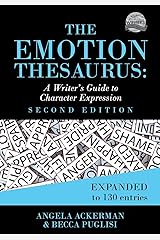
The Emotion Thesaurus: A Writer's Guide to Character Expression (Second Edition) (Writers Helping Writers Series) Paperback
The Emotion Thesaurus: A Writer's Guide to Character Expression
Available at your Favorite Bookseller

Tips on Showing Your Characters, Not Just Telling About Them

If you are a writer, you don't want to start editing a scene and discover it reads like a second-grader wrote it. To draw readers into the story use imaginative imagery. Include characters who come to life for the reader. Your words convey the emotion and action so well a reader becomes wrapped up in the story.

I have a tip today to help you find the right words to develop a full character.

My go-to book for developing scenes and characters is The Emotion Thesaurus: A Writers Guide to Characters Expression. 

According to the description, the purpose of The Emotion Thesaurus, "in its easy-to-navigate list format, will inspire you to create stronger, fresher character expressions and engage readers from your first page to your last."

The table of contents is easy to use to find the emotion you need to portray. You'll appreciate it when looking through the 130 emotions listed to discover the one you need. Here are examples of the emotions that are covered in the book--Fear, Frustration, Happiness, Impatience, Nostalgia, Pride and more.

In the listings for each emotion, you will find ideas to keep your writing fresh.

  • physical signals
  • internal sensations
  • mental responses
  • cues of acute or long-term (emotion)
The authors do not suggest you copy the information word for word, but rather to allow their suggestions to inspire you to show, not tell the story.

May I suggest The Emotion Thesaurus as the perfect gift for an aspiring or veteran writer? Since writing this book, the authors have extended the thesaurus idea into a series for other topics in writing like character flaws, character attributes, psychological trauma and more.

Do you use this book or any of the books in the series? Please leave a comment below. 

If you purchase the book using the link below, I will gain a few pennies from the sale. Plus you can check out the entire list of books in the series. Thank you.


πŸ› πŸ› πŸ› 
While you are in the gift buying mood, why not purchase an eBook that will help you with your writing? Yes, it's okay to buy yourself a gift and not feel guilty about it! 

Romance and Mystery Authors on Writing: Tips on the Writing Process, Publishing and Marketing
Compiled by J. Q. Rose

Romance and Mystery Authors On Writing--a Gift to Yourself 

Fifteen romance and mystery authors offer writing tips they have gleaned from their experiences as “on-the-job” writers. The tips in the eBook are organized into the main topics of writing, publishing and marketing. The authors share 

πŸ›  “light bulb moments” in their writing journey, 

πŸ›  questions they are asked most often (and their answers)

πŸ›  the most helpful advice on writing they have received. 

The goal of sharing this information is to smooth and straighten the rocky and twisting journey for writers along the path to enjoy a rewarding career in writing.

Best wishes to you for success in your writing career.

Authors who have graciously contributed to this project are:

Conda Douglas, C. Hope Clark, Gail Roughton, Heather Fraser Brainerd, Heather Haven, Helena Fairfax, J.Q. Rose, Joan Curtis, Joselyn Vaughn, Kathy MacIntosh, Marsha West, Melissa Maygrove, Miss Mae, Roseanne Dowell, Sara-Jayne Townsend.

Thank you, inspiring authors, for sharing your knowledge!

Click here to download this jam-packed-with-helpful-information eBook now for 99 cents!

PS--GIVE A VALUABLE GIFT TO AUTHORS. WRITE REVIEWS FOR THEIR BOOKS.


The Rose Courier

Click here to receive the monthly edition of the Rose Courier in your inbox. 
Don't miss out on the news from J.Q. Rose, articles, guest authors and giveaways!!


Thursday, January 15, 2015

Romance and Mystery Authors on Writing: Mystery Author Joan C. Curtis on Dialogue, Characters, Settings, and 5 Tips on Editing Giveaway


Romance and Mystery Authors on Writing, series on writing tips
Hello and welcome to the Romance and Mystery Authors on Writing series.

I am excited to have multi-published, award-winning business writer, Joan C. Curtis here. She put down her scholarly pen to write a mystery. And what a mystery it is. Joan's book, The Clock Strikes Midnight, is definitely a page-turner. I'm enjoying reading the relationship between the two sisters and can't stop wondering about who killed their mother. Delicious. 

Joan is donating her e-book, What Does It Take to Write, Publish, and Sell a Novel, as a door prize for a lucky commenter. The drawing will be after 9 pm EST Sunday evening.


# # # #

Welcome, Joan. Thanks for sharing your writing tips with us. You have included many helpful points for us. 


Writing Tips by Joan C. Curtis


DIALOGUE
The best advice I ever got about writing dialogue is to eavesdrop on conversations. Not for the content, unless the content is particularly stimulating. Instead for the expressions and word choice. When writing dialogue, it’s important to distinguish your characters by their individual voices.

For example, you may have a southern “redneck” character. That character speaks very differently than your more sophisticated characters.

“I’m gonna carry my ma to the market come Saturday evening.”
“I’m taking my mother to the grocery store on Saturday afternoon.”

You also want to be sure that your younger characters speak in an age-appropriate way. Don’t have five year olds talking like adults or teens.

Years ago, writers like Mark Twain used dialect. Today, readers will not tolerate reading dialects. As writers, we must search for other ways to create realistic speakers in the regions where we write. Here’s an example from a southern writer, Mary Kay Andrews, He was sniffing like a dog on point. ‘Are you cooking collard greens?’ he asked. Notice it was unnecessary to drop the “g’s.” Readers can read without dropping “g’s.” I bet you did!

And be sure to read your dialogue out loud.

Dialogue can be the most fun to write. It’s through dialogue that characters take on lives of own. They say things we sometimes don’t expect and if we’re doing it right, in ways we don’t expect!

CHARACTER 

I’ve been credited with creating meaningful characters in The Clock Strikes Midnight. Let me share a few tips about the way to create characters readers can relate to.

First, you must allow the characters to create themselves. Once the person hits the stage in your story, give them the freedom to be who they are. Don’t force yourself onto them. That sounds strange, but if you give it a go, you’ll understand.

Next, as your character emerges, ask yourself questions like, what does this person value, what are his/her goals, how does this person add to the story, in what ways does this person help add to or exacerbate the conflict, how is this character different from the others in the story, what kinds of things does this character like to do, what are his/her work, hobbies. Many writers create bios for their characters. I do not do this until the character is fully formed in my mind through the writing of the story.

Third, make sure the dialogue and action are consistent for the character. I’ve had Beta readers say things like, “I did not expect this character to say something like that. It seemed odd and jarred me.” When I hear that critique, it is clear I got in the character’s way. Readers are great at catching these slip-ups.

Fourth, move away from the story long enough to ponder the character. I like to think about my character while walking or swimming. In those situations I can let my mind travel and my imagination run free. That’s when I’ve had the greatest insights into a character’s behavior or action.

Fifth, if a character is tapping you on the shoulder to do something, do it. In The Clock Strikes Midnight, I had decided to write from two points-of-view: Janie’s and Marlene’s. They were the two main characters in my story. Throughout the writing, their mother kept tapping me on the shoulder, wanting to have her say. I ignored her until the writing came to a complete halt. At that point I gave in and created a new section of the book strictly from the mom’s point-of-view. Readers have told me how valuable that section was to their understanding of the story.

Sixth, people say if you dream in another language, you have mastered the language. In my experience if you dream about your characters, you’ve created real people. Have you ever dreamed about them?

I’ll end with a quote about characterization from DL Doctorow. He said, “Writing is an acceptable form of schizophrenia.”

SETTINGS

The one tip I’ll share about setting is to make it as real as possible without taking away from the story. For some books the setting is the story, example: Under the Tuscan Sun. For most books, however, setting sets the stage. I think of it as the “set” on a stage, to reverse the concept.

Some writers write their setting so well, it becomes almost another character in the story. For example, I love the “cold” mysteries—those set in Sweden, Iceland and other such cold places. There, the weather and the setting are so powerful. It sets the stage for a chilly mystery. Henning Mankell did that expertly in his Detective Wallender series. Steig Larsson also created an amazing setting in The Girl with the Dragoon Tattoo series. Very cold, very ominous.

Cozy mysteries often have cozy settings, in cute little towns or villages. Those help create the theme. Murder happens even in the warmest of places.

As writers we must think about where our action occurs. It can’t just occur in a vacuum. Settings puts the reader somewhere and gives them a foundation for the action.

EDITING

Somewhere I read that creativity lies in the writing and genius in the editing. For me the truth lies somewhere in between.

As a writer I cannot think about editing as I’m writing. I must create and get what I’m writing on paper or on my computer screen. I suggest this over and over to new writers. If you write and then go back and edit, you waste lots of time and disrupt your creative energy.

5 Tips on Editing:

  1)      Nothing you write for the first time is perfect. Re-write and re-write.
  2)      Do not edit until you are out of the creative mode. I usually write freely and then the next day, I read what I wrote the day before. Not to edit, but to put me back in that place to continue creating. On the third or fourth day, I’ll go back through with an eye toward some light editing, but primarily putting in things that I left out. I do not completely edit until the manuscript is finished. I’ve often described it this way. I have on my “Creative Hat” in the beginning. Later, I put on my “Editor’s Hat.” The two require different kinds of thinking.
  3)      Listen to what your readers say or what your editor says. Even though you are the author and you have the final say, often readers and editors have excellent suggestion.
  4)      Don’t be too proud to share your work with an editor.
  5)      If you are self-published, pay for solid editorial services. Your readers deserve that!
# # # # 

With just three months to live, Janie Knox returns to her childhood home
to face her dark past and destroy her mother
s killer. 
Buy Links:

 B&N

About Joan:
Four times business book author, Joan C. Curtis, releases her first mystery/suspense title, The Clock Strikes Midnight.
Mystery Author Joan C. Curtis
Her first-place book awards include: Best mystery manuscript in the Malice Domestic Grants competition and best proposal for nonfiction in the Harriette Austin competition.

Joan has been an avid reader for as long as she can remember.  She reads all kinds of books, including women’s fiction, mysteries, biography, and memoir.  Her passion as a reader lies closer to literary writing with a commercial bent. She writes books she would love to read.

“I write about characters who remind me of myself at times and my sister at times, but never fully so. My stories are told from a woman’s point of view. Characters drive my writing and my reading.”

Having grown up in the South with a mother from Westchester County New York, Joan has a unique take on blending the southern traditions with the eye of a northerner.  She spent most of her childhood in North Carolina and now resides in Georgia.

Connect online with Joan at the Joan C. Curtis site.

Thursday, November 6, 2014

Romance and Mystery Authors on Writing: Sweet Romance Author Joselyn Vaughn on Dialogue, Characters, and Editing, Giveaway


Hello and welcome to the tips on writing series, Romance and Mystery Authors on Writing. Today I'm thrilled to have my friend, critique partner, and talented sweet romance author, Joselyn Vaughn share her tips on writing dialogue, characters, and editing.

This is an especially big week for Joselyn because her eighth book, In for a Pound, was just released from Astraea Press on Tuesday, November 4. I'm doin' a happy dance with her. I was privileged to be "in" on the development of this novel and now so excited to help introduce this touching romance to readers right here on my blog.

Joselyn is giving away the e-book version of one of her books. The winner can choose which e-book. Check out Joselyn's Amazon Author page to see all the possibilities. To be in the drawing, please leave a comment. 

Hi Joselyn,

Before we get to all the great tips you've shared, let me ask you this--What is the question you get all the time from budding or experienced authors and your readers?
People always ask how long it takes to write a book. It takes me about a year. Writing takes time. You have to be willing to eat the elephant bite by bite. If you want to write a book, you will find the minutes or hours in your day to make it happen.


DIALOGUE
            Dialogue can be broken up using actions, internal thoughts, and emotional responses to the conversation. Instead of scrounging through the thesaurus for alternatives to said, these options will allow you to develop your characters in subtle ways.

CHARACTER
            Avoiding stereotypical characters, especially for supporting roles, can be difficult. Sometimes simply changing their gender can add new dimensions to the plot or add a whole new subplot.   

EDITING

a. When proofreading, read your manuscript out of order. It keeps you from getting caught up in the story and missing typographical mistakes.

b. Find critique partners you can trust. People who will help you make your work better. A good group can help develop and direct ideas as well as evaluate individual scenes for strengths and weaknesses. 

Please share a “light bulb moment” about your writing experience.
I tend to get caught up in marketing and promoting and wondering what works and what doesn’t that I forget how fun creating stories is. Don’t lose the joy in writing. 
# # # #
I know this is a whirlwind week for you, and I appreciate you taking time to stop by the blog to share writing tips. Now let's find out about that new book, In for a Pound.

In for a Pound, sweet romance by Joselyn Vaughn

Back of the book:
Joshua Pounds speeds to Pine Bottom to take care of his ailing dad, expecting to spend his time bouncing between doctors’ appointments and cancer treatments. His first task, however, requires a canoe paddle and helping his father’s friend win the honeymoon of her dreams. He doesn’t count on falling in love with an engaged woman.
Sidney Walker had her life all planned: the wedding, the honeymoon, and the dependable husband --until her fiancΓ© crushes her dreams by putting riches above their relationship.
As her engagement crumbles, her heartbreak rocks Joshua’s confirmed bachelor status. He picks up the pieces, but the challenge threatens both of their ideas about love.
Will Joshua’s resolve to keep his heart untouched break Sidney’s?

About Joselyn:
I am a stay at home mom who has walked on the dark side of potty training. When not traversing
that valley of shadow, I write, run, and sew. Sometimes with successful results. For more information, check out Joselyn's blog.

Please leave a comment to enter the drawing for one of Joselyn's e-books. Are you a stay-at-home mom who is writing and potty training your toddler? We'd love to hear from you.


Wednesday, October 29, 2014

Romance and Mystery Authors on Writing with Gail Roughton, Giveaway

Wishing you a happy and safe Halloween!

Speaking of Halloween, today we welcome our author-tipster Gail Roughton who penned an entire series about a witch and a warlock, perfect for this time of year. Witch Resurrected is the first in this fun, action-packed War-n-Wit Inc. romance/mystery. You could win that e-book or take your choice of any PDF format of e-books on Gail's Amazon page just by leaving a comment below.


Welcome, Gail! You've conjured up fantastic tips for us today. I've invited all these folks to pull up a chair to your kitchen table and enjoy a chat in your Southern home. It's fall now so I don't know if you're serving delicious Southern sweet tea or hot apple cider to our visitors. Let's start off with your "light bulb" moment in your writing experience.


I don’t know the exact moment when it clicked but my writing changed from amateur to professional when I learned how to show, not tell.  That’s what every publisher wants, what every editor tells you to do.  Unfortunately, they don’t tell you how to do it.  I don’t think they can tell you, because I think the “click” happens differently for everyone.  The closest I can come to an explanation is an example.  It’s really hot outside. How do you show that and not tell it?  Let’s see.  “It was very hot outside.”  Well, big whoop.  That’s a statement of fact, but it doesn't make the reader feel hot, now does it?  So okay.  “It was hot enough to fry eggs on the sidewalk.”  Better, but a standard clichΓ© and clichΓ©s are to be avoided as much as possible.  So try again.  “Steam sizzled up from the sidewalk.”  Do you see those threads of steam streaming up from the concrete?  That’s show.  Not tell.  And it’s like riding a bicycle.  Once you hear that “click”—you can’t un-hear it.  You’ll never write the same way again.

Thanks, Gail, for that excellent advice on show and tell. 

Now, Readers, Gail didn't play any tricks on you. Her tips on dialogue, characters, settings, editing, marketing/promoting are solid treats for writers. Ya'all get comfortable and read on.

DIALOGUE
Dialogue is your best friend. It carries your book. It can turn any novel, however short or however long, into a quick, fast, fabulous read, provided it reads naturally.  People don’t speak in grammatically perfect, complete sentences, and neither should your characters. 
People have their own speech patterns, flow, idioms and idiosyncrasies based on birthplace and background.  So should your characters. Absolutely nothing jars a reader, at least me (me being the reader I know best) out of story faster than a character talking “out of character”.  A good ol’ southern boy is not going to suddenly proclaim, “Oh, my! That startled me out of my wits!” He’s going to say “That ‘bout scared the pants off me!” (Actually, that’s not really what a good ol’ southern boy’s going to say in such a situation but this is a G blog and you get the general idea.)  Also, watch those tags.  In a two-person conversation, it’s pretty obvious which character is talking.  Adding tags after every line of dialogue breaks the flow and thereby defeats the entire purpose of dialogue in the first place.  You want the reader to feel as though they’re listening to a conversation, not reading one. 

CHARACTERS
I know writers who develop their characters like a science project.  They make lists of physical attributes, traits, activities.  They even chart their horoscopes.  And it works for them, so more power to them.  I don’t know where my characters come from.  They just – appear.  Sometimes fully grown and raring to go, sometimes in a ghostly shadow that gradually acquires solid form and substance.  I start writing when they stand up independently and start walking and talking and telling me their story.  They tell the story, not me.  I just transcribe their words and actions onto a computer screen.  I can’t tell you how to develop a character because I don’t know how.  And once the story’s told and the book’s written, I look at both the characters and the book itself the same way I look at my children – with an intense feeling of disbelief that I created them, that I had anything to do with them.  They’ve become independent entities I really had very little to do with.


SETTINGS
Write what you know.  Write where you know.  Someplace you’ve at least visited, even if you haven’t lived there.  Now sometimes, of course, characters suddenly decide they’re taking a vacation to someplace you know nothing about.  There’s this wonderful thing called the internet , usually full of videos of that exact place, lists of attractions, restaurants, you name it.  But to write a book where a reader can live, stick as much as possible with what you know, where you were raised, someplace you love.  Or hate. Depends on the mood you want to convey, of course.  Also, remember it’s not necessary to fully describe every tree in the woods, every bush in a yard.  Description sets a mood and a scene. Every reader will envision the details in their own unique way, personalize the story so it resonates with them.  You’re telling a story.  You’re not writing a travel guide. 

1      EDITING
When you first finish a book, put it aside for a while. At least a week, preferably a month to six weeks.  Then re-read it.  You’re your own best first editor.  Then take a scalpel to it.  With the ruthlessness of a surgeon.  Nothing you wrote is so good it can’t be improved.  Nothing you ever write is so good it can’t be improved.  Read it like you’re reading it for the first time, like you just picked it up in a bookstore.  And be honest.  If you’d just bought this book, would you keep reading it?  If not, why not?  That’s for the story itself.  Insofar as the technical writing, how many unnecessary words can be cut?  I’m speaking specifically of the dreaded “that”, as in  “Mary knew that she was in trouble.  Sarah knew that she was in trouble, too.”  Oh, yeah, those “that’s” repeated over and over really slow a reader down.  “Mary knew she was in trouble. Sarah knew it, too.”  Then move on to the second editor.  Somebody that’s not you.  They’re going to see a lot of things you missed completely.  Typos, incongruities in the timeline, missing gaps of necessary information, information dumps that are completely unnecessary.  And sometimes—gasp—they’re actually going to suggest an alternate way of phrasing a passage or structuring the plot.  And here’s where a serious writer needs to lose that gasp of outraged indignation and lose it quick.  LISTEN TO THEM.  They might be wrong.  But they might be right.  Don’t get your feelings hurt.  Because one more time—nothing you wrote is so good it can’t be improved.  Nothing you ever write is so good it can’t be improved.

1    MARKETING/PROMOTING
Write a good book. All the marketing and promoting in the world won’t sell a book that’s boring, poorly edited, full of errors, and populated by cardboard characters. The best promo is the next book.  And that next book better be just as good as, if not better, than the first.
# # # #

ABOUT GAIL ROUGHTON
Gail Roughton is a native of small town Georgia whose Deep South heritage features prominently in much of her work. She’s worked in a law office for close to forty years, during which time she’s raised three children and quite a few attorneys. She’s kept herself more or less sane by writing novels and tossing the completed manuscripts into her closet.
Gail and Grandson
A cross-genre writer, she’s produced books ranging from humor to romance to thriller to horror and is never quite sure herself what to expect when she sits down at the keyboard. Now multi-published by Books We Love, Ltd., her credits include the War-N-Wit, Inc.  series,
War-N-Wit, Inc. - Witch Resurrected, War-N-With, Inc. - Mean Streets, The Color of Seven ,Vanished, and Country Justice. Currently, she’s working on Black Turkey Walk, the second in the Country Justice series, as well as the Sisters of Prophecy series, co-written with fellow Books We Love, Ltd. author Jude Pittman. Another War-N-Wit plot always seems to be brewing on the back burner, too, whether she’s actually trying to brew one or not, and usually boils quicker when she’s trying not to brew one at all.  Stop in and visit! You can reach Gail at:   http://gailroughton.blogspot.comhttp://flowersonthefence.blogspot.com or message her at www.facebook.com/GailRoughton

Do you have questions for Gail about writing? Please ask or just say hi to be eligible to win the drawing for you choice of e-book on the Amazon page. 

New Beginnings with J.Q. Rose

Happy New Year from J.Q. Rose! Photo by  Carson Arias  on  Unsplash   Hello Friends, Welcome to Focus on Story! Happy 2026! January 1, 2026,...

Popular Posts from Last Year